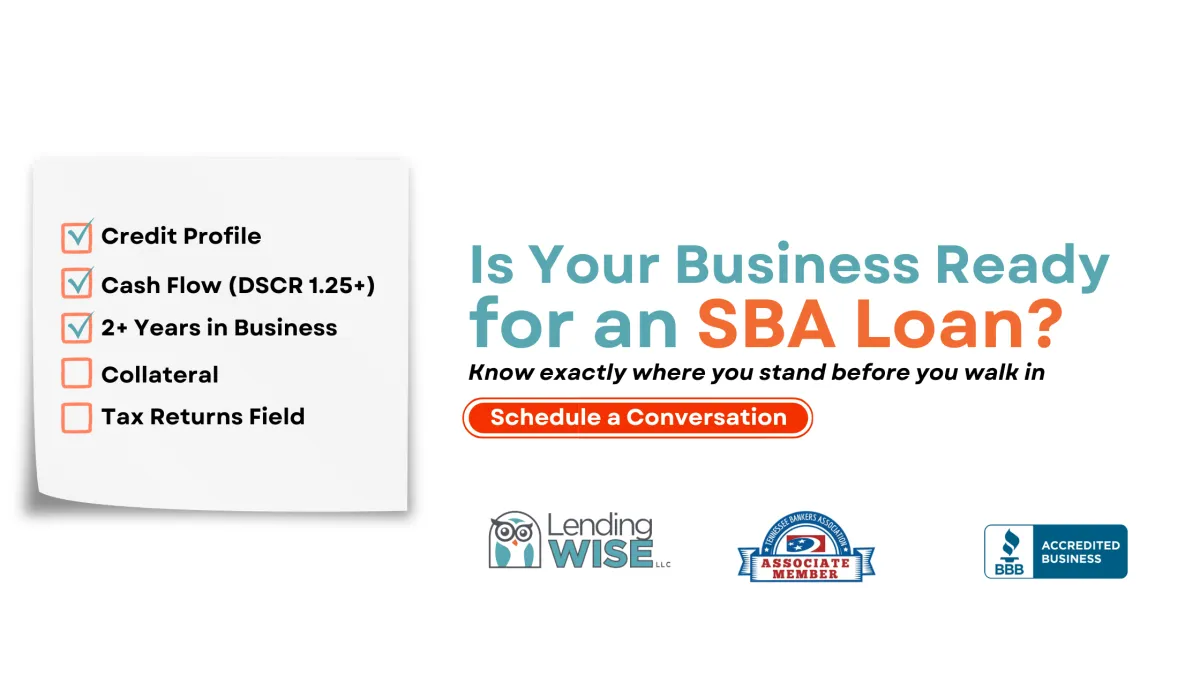
Is Your Business Ready for an SBA Loan?
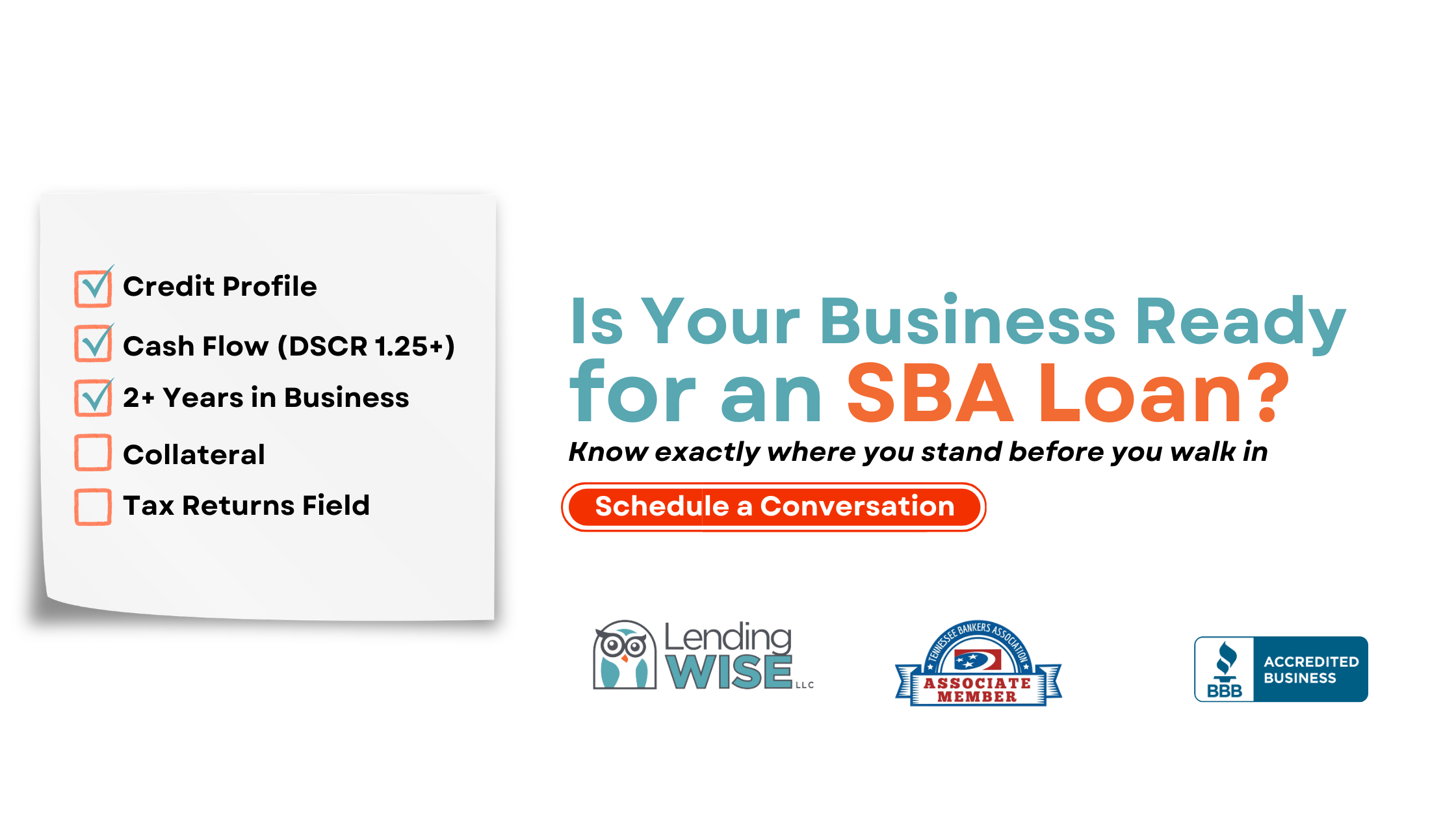
Is Your Business Ready for an SBA Loan?
Here’s How to Know
AUTHORS: Dave Prescher & Zac Smith
Introduction
If you have been running your business for a few years and things are going well, it is natural to start thinking about what growth could look like with the right funding behind you.
SBA loans are one of the most powerful tools available to small business owners. They come with lower rates, longer terms, and access to capital that banks often will not offer on their own.
But they are not available to everyone, and walking into a lender conversation unprepared is one of the most common and costly mistakes business owners make. Before you apply, you need to know where you actually stand. Here is what lenders are looking at and how to know if your business is ready.
Key Takeaways
What Is an SBA Loan and Why It Matters
The 5 Things Lenders Check Before Saying Yes
Signs You Are Probably Ready
Signs You Need More Preparation
The Gap Most Business Owners Miss
What Is an SBA Loan and Why Does It Matter?
The Small Business Administration does not lend money directly. Instead, it guarantees a portion of the loan made by an approved lender, typically a bank or credit union. That guarantee reduces the lender’s risk, which means they can offer better terms to business owners who might not otherwise qualify for conventional financing.
SBA 7(a) loans are the most common type and can be used for working capital, equipment, real estate, business acquisition, and more. Loan amounts can go up to $5 million, with repayment terms up to 10 years for most uses and up to 25 years for real estate.
The catch: SBA loans require you to meet a higher standard. Lenders will look closely at your financials, your credit, and your ability to repay.
The 5 Things Lenders Check Before Saying Yes
Most SBA lenders are focused on five core areas:
Credit
Both your personal credit score and your business credit profile matter. Many SBA lenders want to see a personal FICO score of 650 or higher. Your FICO SBSS score (a blended business credit score) is also reviewed. Lower scores do not mean automatic denial, but they do trigger more scrutiny.Cash Flow (DSCR)
Lenders want to see that your business generates enough cash to cover its debt obligations. This is measured by your Debt Service Coverage Ratio (DSCR). A ratio of 1.25 or higher is typically the minimum, meaning your business generates 25 percent more cash than what is needed to cover debt payments.Time in Business
Most SBA lenders require at least two years of operating history. Some programs allow for less, but the shorter your track record, the stronger every other area needs to be.Collateral
SBA loans often require collateral, which can include business assets, real estate, or personal assets. If your business does not have enough collateral, lenders may still approve the loan, but they will look harder at cash flow and guarantees.Owner Equity / Skin in the Game
Lenders want to see that you have invested in your own business. If you are acquiring a business or making a major expansion, expect to put 10 to 20 percent down.
Signs You Are Probably Ready
You do not need to be perfect in every category, but you should be able to say “yes” to most of these:
Personal credit score above 650
At least two years in business
Financial statements that are current, organized, and accurate
Consistent revenue and positive cash flow
Clear explanation of what the funding is for and how it will help your business grow
Business and personal tax returns filed for the past two to three years
Signs You Need More Preparation Before Applying
These are not permanent disqualifiers. They are signals that you should prepare before talking to lenders:
Personal credit score below 650
Financials that are inconsistent or show losses
Outstanding tax liens or judgments
Books that are not up to date
You do not know your DSCR
Less than one year in business
The Gap Most Business Owners Miss
The number one mistake we see is business owners applying before they are ready.
They have a real business. They have a legitimate need for capital. But they show up to a lender conversation without the right documentation, the right credit profile, or a clear story about how they will use and repay the money.
Getting denied is not just frustrating. It can also affect your credit and make future applications harder.
The better move is to get a clear picture of where you stand before you apply, identify any gaps, and close them. That might take 30 days or it might take six months, but the preparation almost always results in better terms and a higher chance of approval.
Next Step: Get an SBA Readiness Review
If you are unsure where your business stands or you want a clear roadmap before you apply, that is exactly the kind of conversation we have at LendingWISE.
In a short SBA Readiness Review, we will:
Look at your current financial position and credit
Show you how a lender will see your file
Identify any gaps that could slow down or block approval
Outline specific steps to get you ready or move forward now
What to do next:
What to do: Click the “Schedule Review” button below
How to do it: Pick a 20‑minute time that works this week
What you get: A simple, honest assessment of your SBA readiness
What happens next: We either introduce you to a lender now or give you a short plan to get ready fast.

Resources
Quick Link
Learn